
Table of Contents
This canopy tree survey was designed to assess the level of understanding among Chinese residents in Manningham regarding recent changes to canopy tree regulations.
Recent changes to Victorian planning law were introduced through Planning Scheme Amendment VC289, which came into effect on 15 September 2025. The amendment added Clause 52.37 (Canopy Trees) to all Victorian planning schemes. Under this clause, a planning permit may now be required to remove, destroy or lop certain canopy trees on residential land. A canopy tree is generally defined as a tree that is more than 5 metres tall, with a trunk circumference greater than 0.5 metres and a canopy diameter of at least 4 metres.
These changes aim to protect and increase urban tree canopy across Victoria, contributing to improved biodiversity, reduced urban heat and greener neighbourhoods. However, given that the policy is relatively new, public awareness may be limited, particularly among culturally and linguistically diverse communities.
The survey was conducted between 20th March and 25th March at multiple locations, including The Pines Shopping Centre, Westfield Shopping Centre, and Asian No.1 Supermarket. Participants were approached in these public spaces and invited to complete a short questionnaire. In total, 57 valid responses were collected.
The survey focused on testing participants’ knowledge of whether permits are required for removing or modifying canopy trees, even in the absence of construction plans.
The survey included 13 questions. The following section provides an overview of the survey and analyses the collected data.
Q1: Do you live in Manningham?
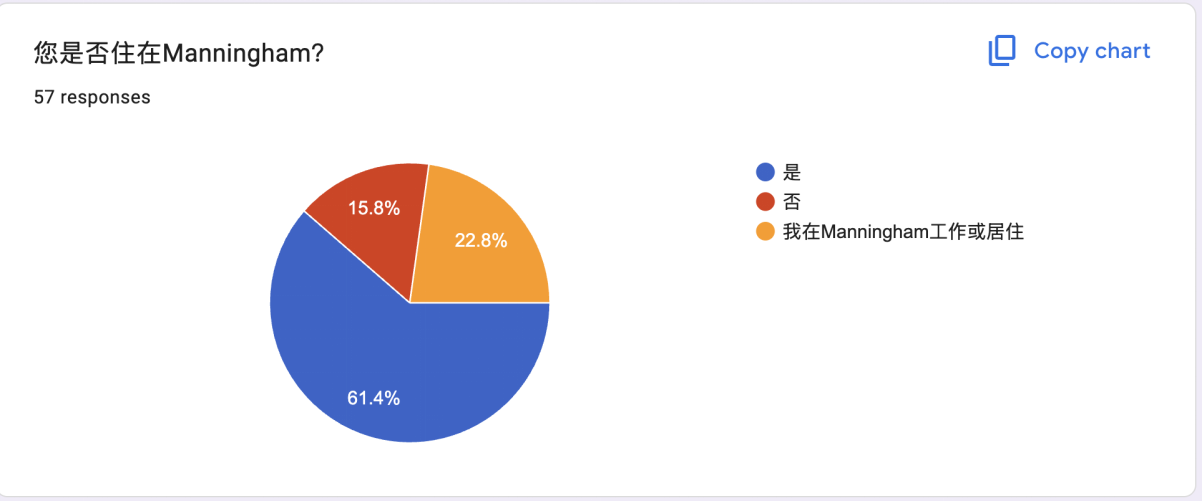
Most of the people who responded to the Chinese-language survey have a clear connection to Manningham. About 61% said they live in the area, with another 23% saying they work or spend time here. Only a small group — around 16% — said they don’t live in Manningham.
Q2: What is your postcode?
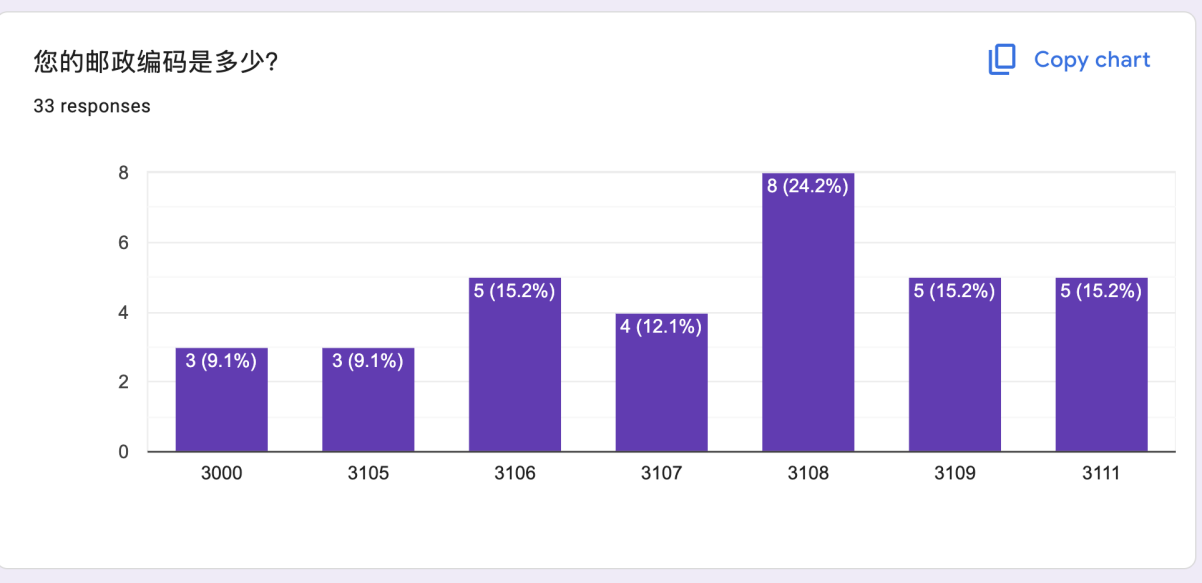
While 3108 (Doncaster) has the highest proportion at 24.2%, responses are otherwise relatively evenly distributed across different postcodes. This suggests that the data reflects a broad range of neighbourhoods rather than being concentrated in a single area of the Manningham.
Q3: How long have you lived in Manningham?
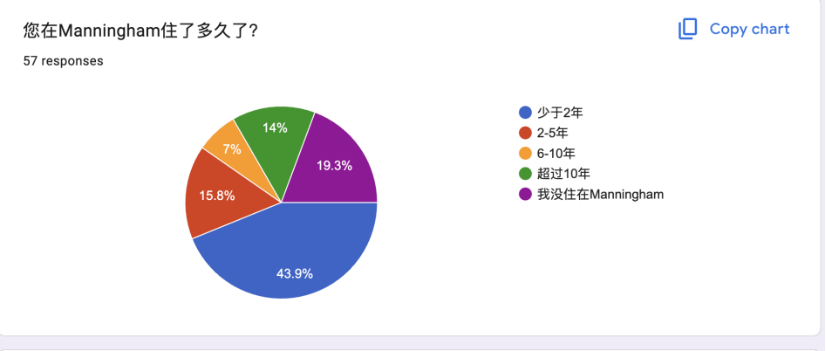
A majority of respondents are relatively new to Manningham, with 59.7% having lived in the area for less than five years (43.9% under two years and 15.8% between two and five years). This suggests that many views in the survey come from newer residents who may still be becoming familiar with local rules and the environment.
Q4: How important was Manningham’s green environment (trees, parks and natural surroundings) in your decision to live here?
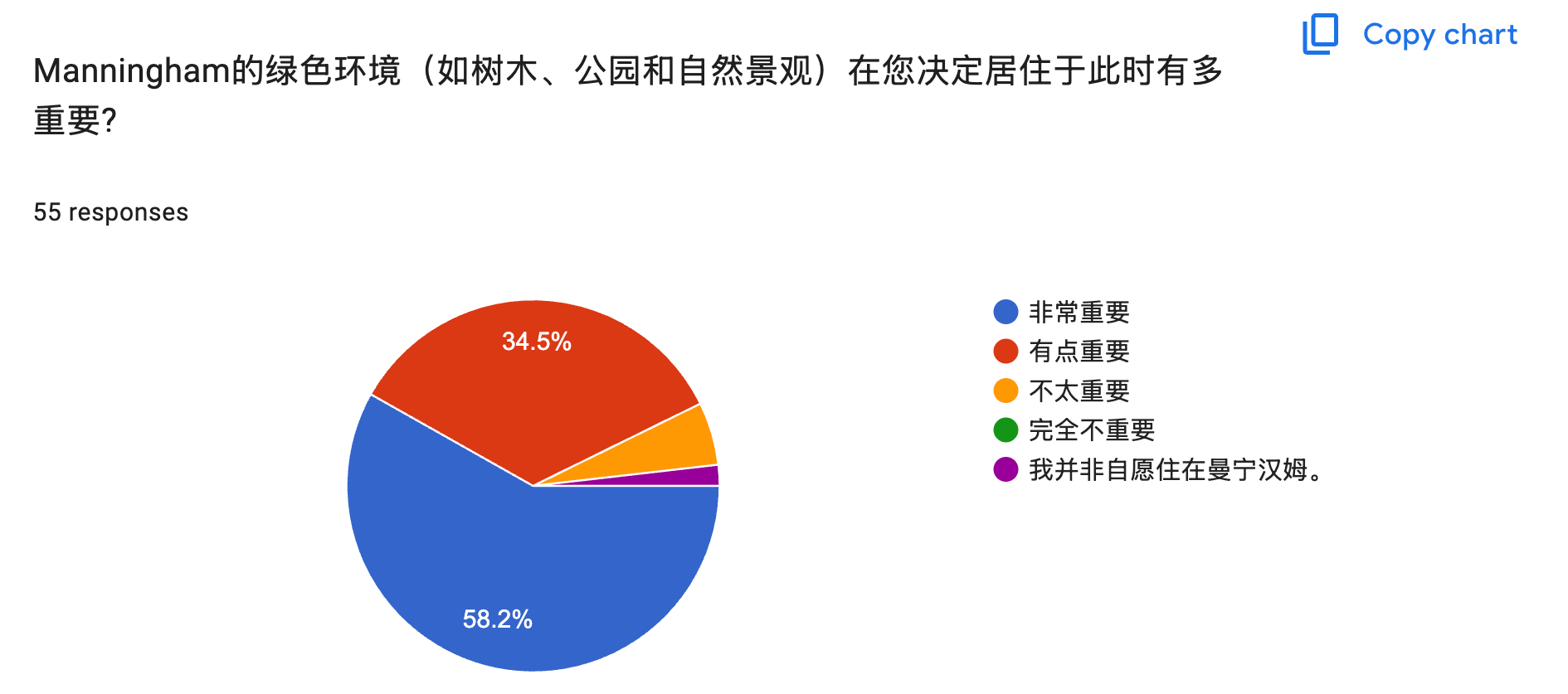
A significant majority of respondents (92.7%) said that Manningham’s green environment was important in their decision to live there, including 58.2% who described it as “very important.” This suggests that trees, parks and natural surroundings are a major factor influencing Chinese residential choice. Even if they have only lived here for a short time, they still consider the environment very important to them.
Q5: Before today, had you heard the term “canopy tree” used in Manningham’s planning rules?
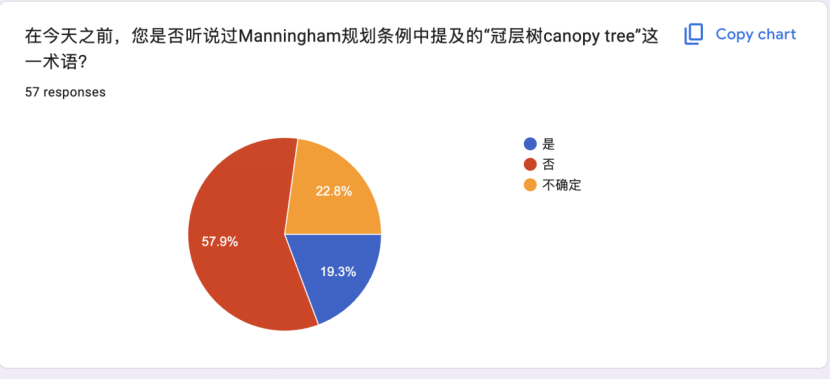
57.9% of respondents have never heard of the term “canopy tree, only 19.3% were familiar with the term, indicating low public awareness.
Q6: Which of the following best describes a “canopy tree” under the planning rules?
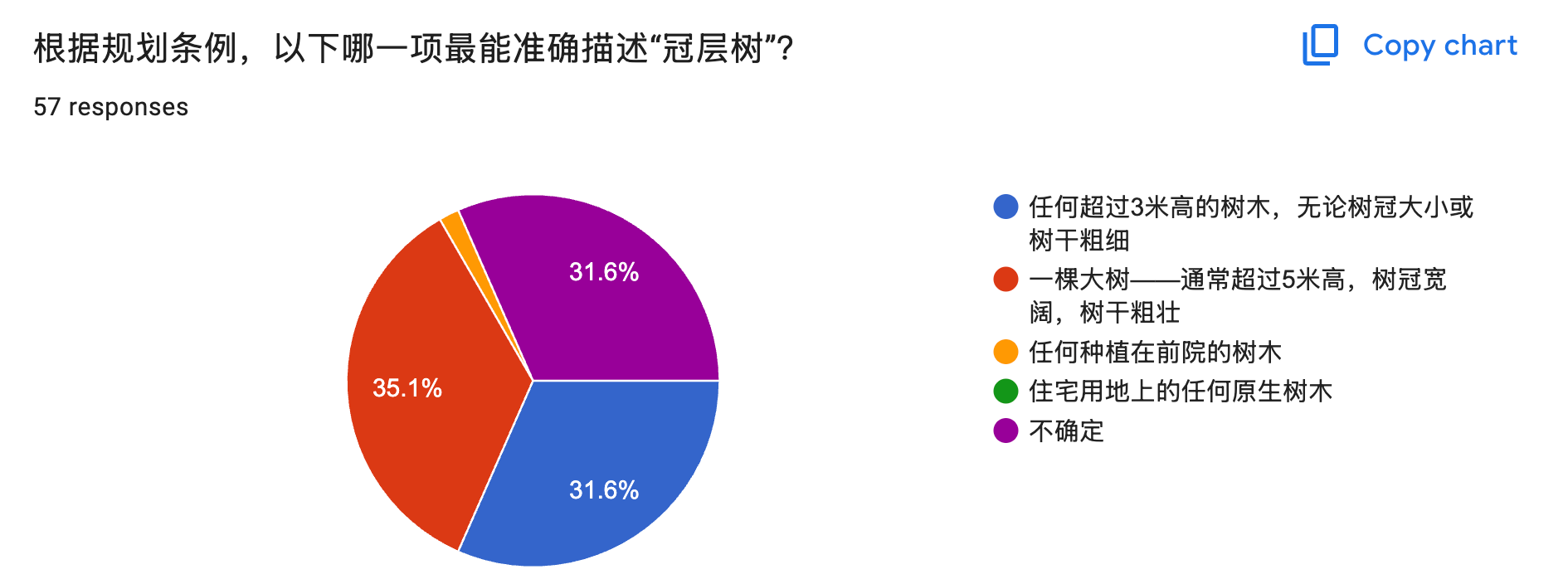
Even among those familiar with the term, understanding is limited, with only 35.1% selecting the most accurate definition.
Nearly two-thirds of respondents (63.2%) gave incorrect answers, including 31.6% who believed a canopy tree refers to any tree taller than three metres and another 31.6% who were unsure.
Q7: Did you know that removing or significantly pruning certain canopy trees on residential land may require a planning permit?
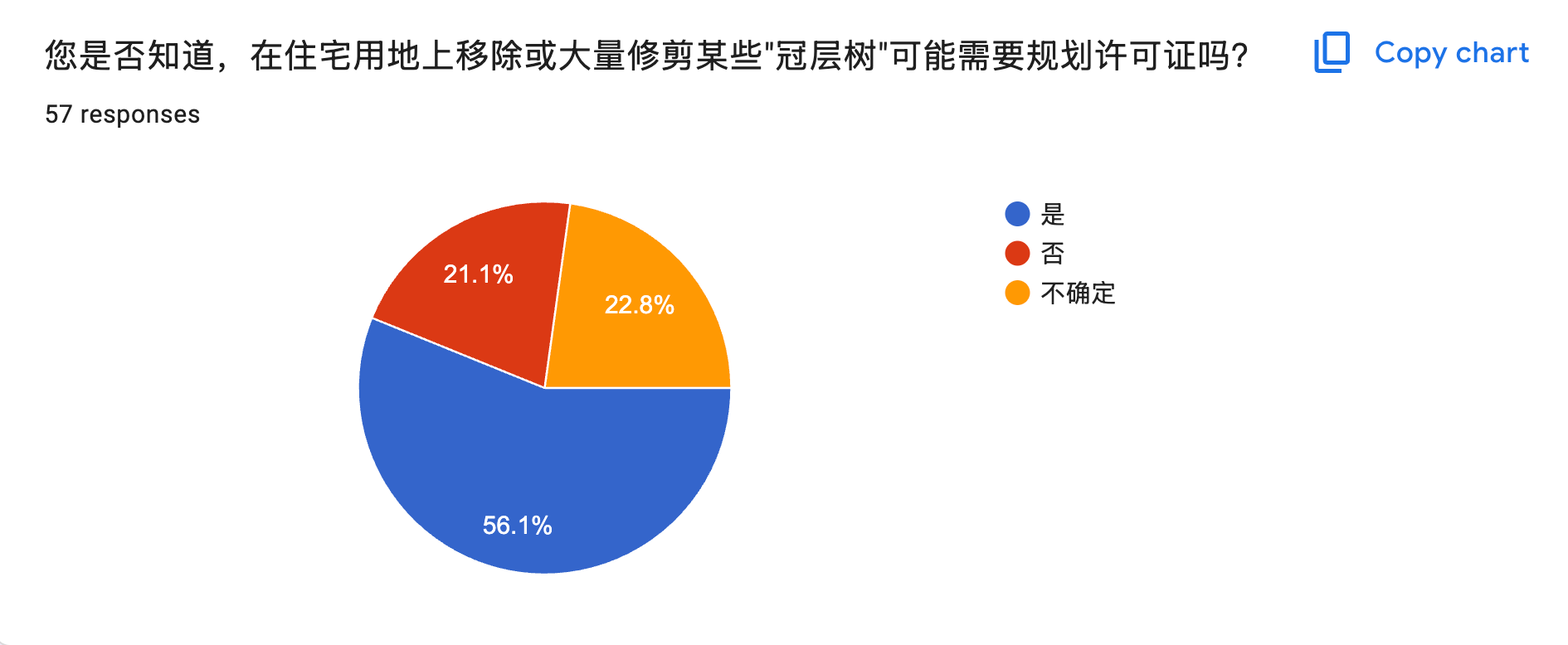
About half of Chinese residents (56.1%) said they were aware that a permit may be required, while a substantial proportion either were unsure (22.8%) or believed no permit was needed (21.1%).
Q8: When is a planning permit needed to remove a canopy tree on residential land in Manningham?
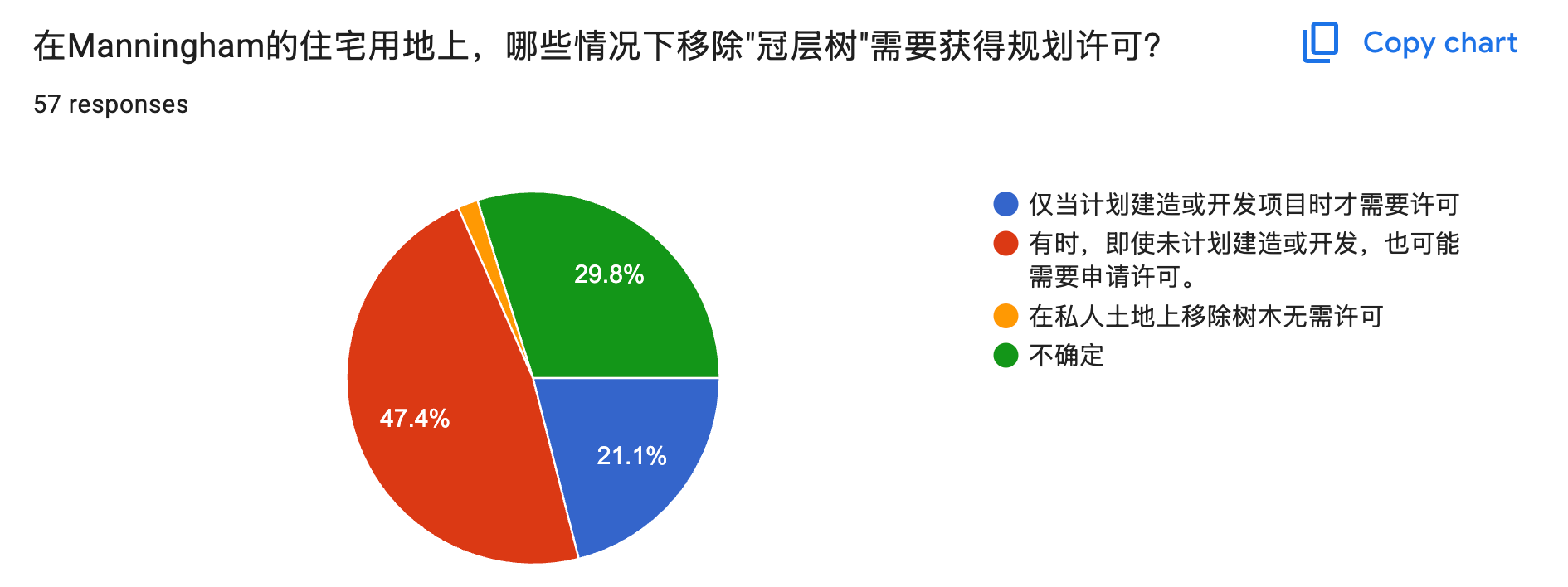
About 47% of Chinese residents gave the correct answer, recognising that cutting down canopy trees requires a permit even if there are no plans for building or construction.
Q9: If Council approves the removal of a canopy tree, can it require a replacement tree to be planted?
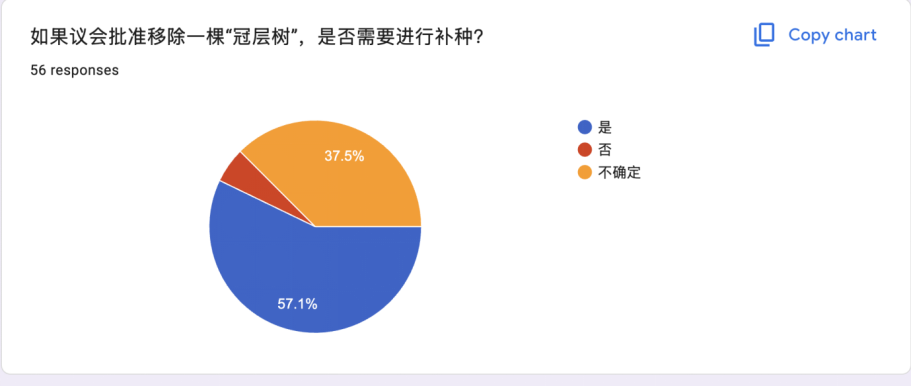
57.1 per cent of Chinese choose the correct answer, which is Council can require a replacement tree to be planted.
Q10: Which of the following trees removes the most air pollution?
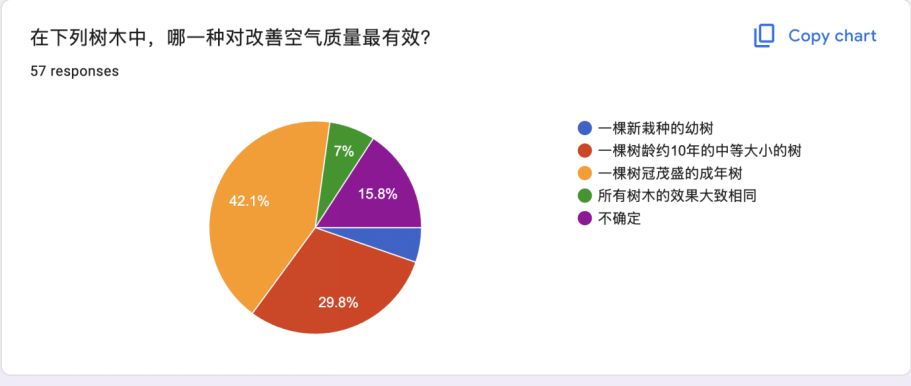
According to the survey from Manningham Life, about 60% of Chinese are unaware of which trees are most beneficial for air quality. Only about 42% of Chinese choose the correct answer, which is ‘mature trees with large canopy’.
Q11: Compared with a few years ago, how has tree canopy in your neighbourhood changed?
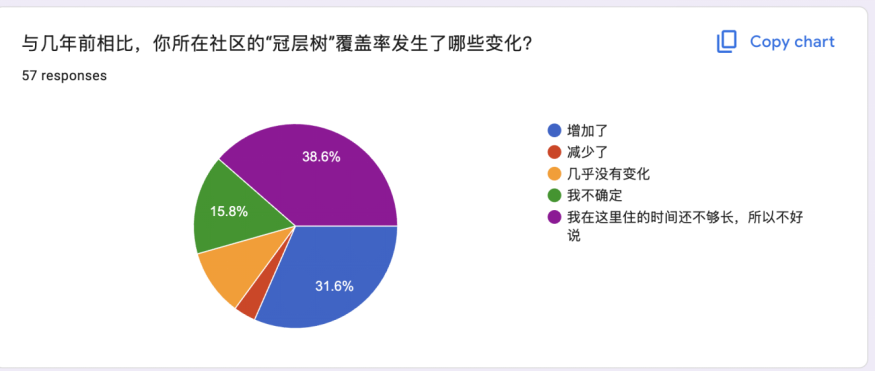
While around half believe there has been a decline, 31.6% of respondents said tree canopy has increased, and about 15% were unsure.
This variation may reflect differences in individual experience. Those who perceive an increase may not be closely observing changes over time or may be less familiar with their surrounding neighbourhoods.
Q12: How well do you think Manningham Council has communicated its rules about canopy trees on residential properties?
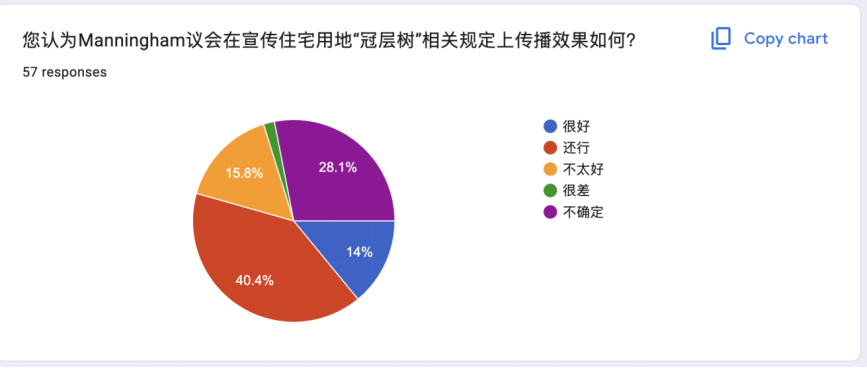
A combined 54.4% of respondents rated it as “very good” or “okay,” while a notable proportion expressed uncertainty (28.1%) or felt the communication was not very effective (15.8%), with a small number rating it as poor.
Q13: Which of the following best reflects your view about regulating large trees on private residential properties in Manningham?
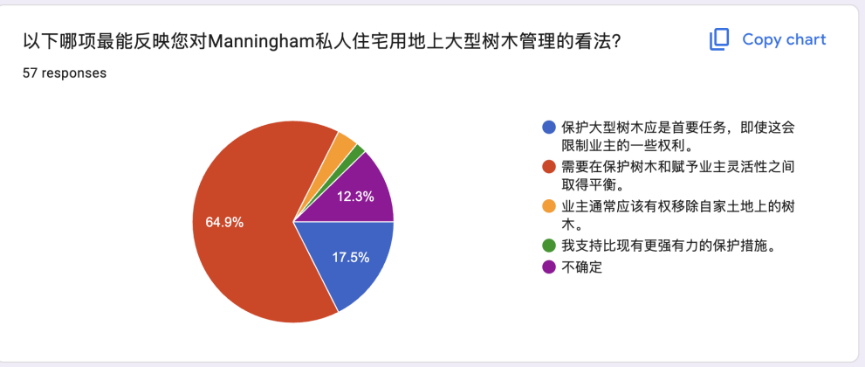
A majority of respondents (64.9%) support a balanced approach to tree management. Only a small proportion favour unrestricted removal, indicating that most Chinese residents prefer moderate and practical regulation.