
Table of Contents
A Manningham Life survey was conducted between 20 and 30 March, with the link shared online to invite community feedback. The English-language survey drew 149 responses, with the majority of respondents having lived in Manningham for more than 10 years — offering insights grounded in long-term experience of the area. Below are the key findings.
1. Importance of greenery
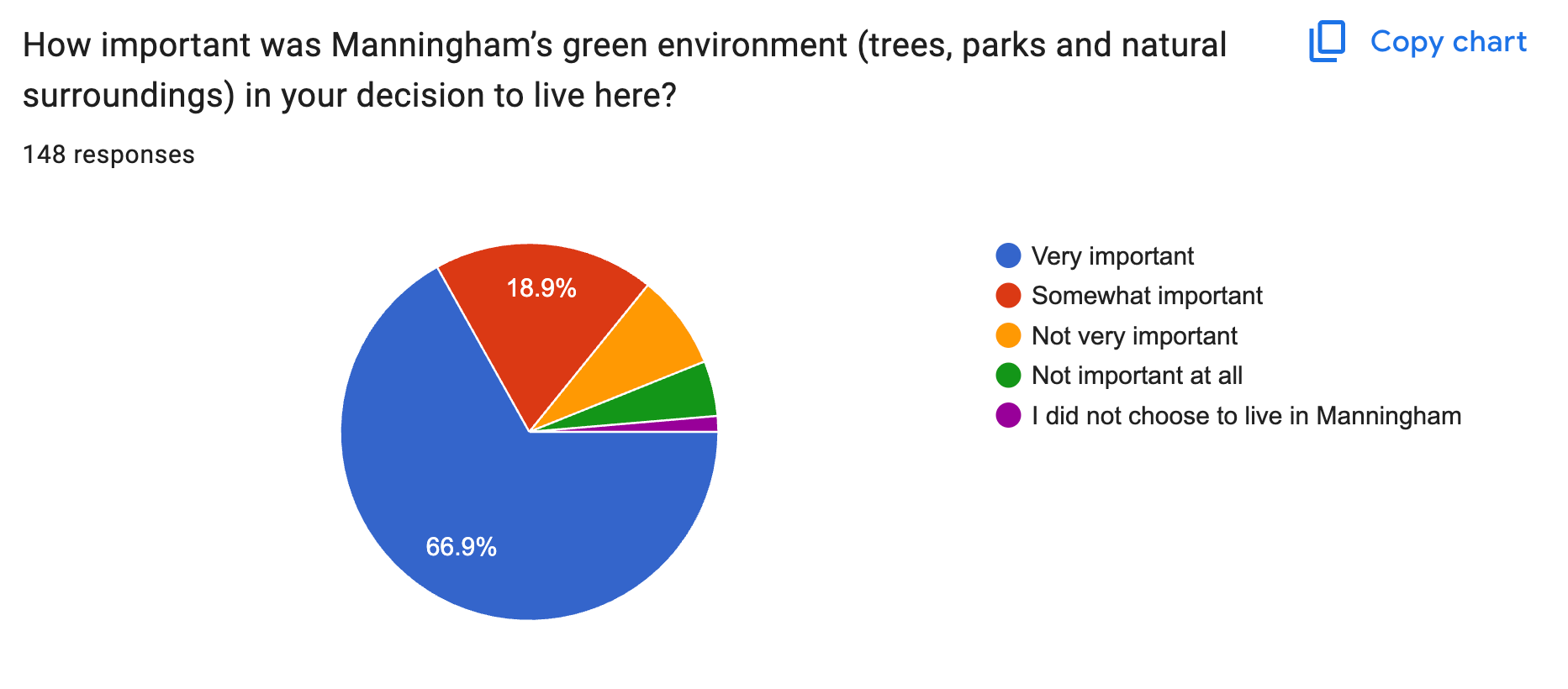
What the responses show:
A clear majority (around two-thirds) say greenery was very important in their decision to live in Manningham.
What this indicates:
Green space is one of the main reasons people choose to live in Manningham. It shapes how people see the area and what they value about it. That gives strong support for protecting tree canopy as part of what makes Manningham what it is.
2. Awareness of the term “canopy tree”
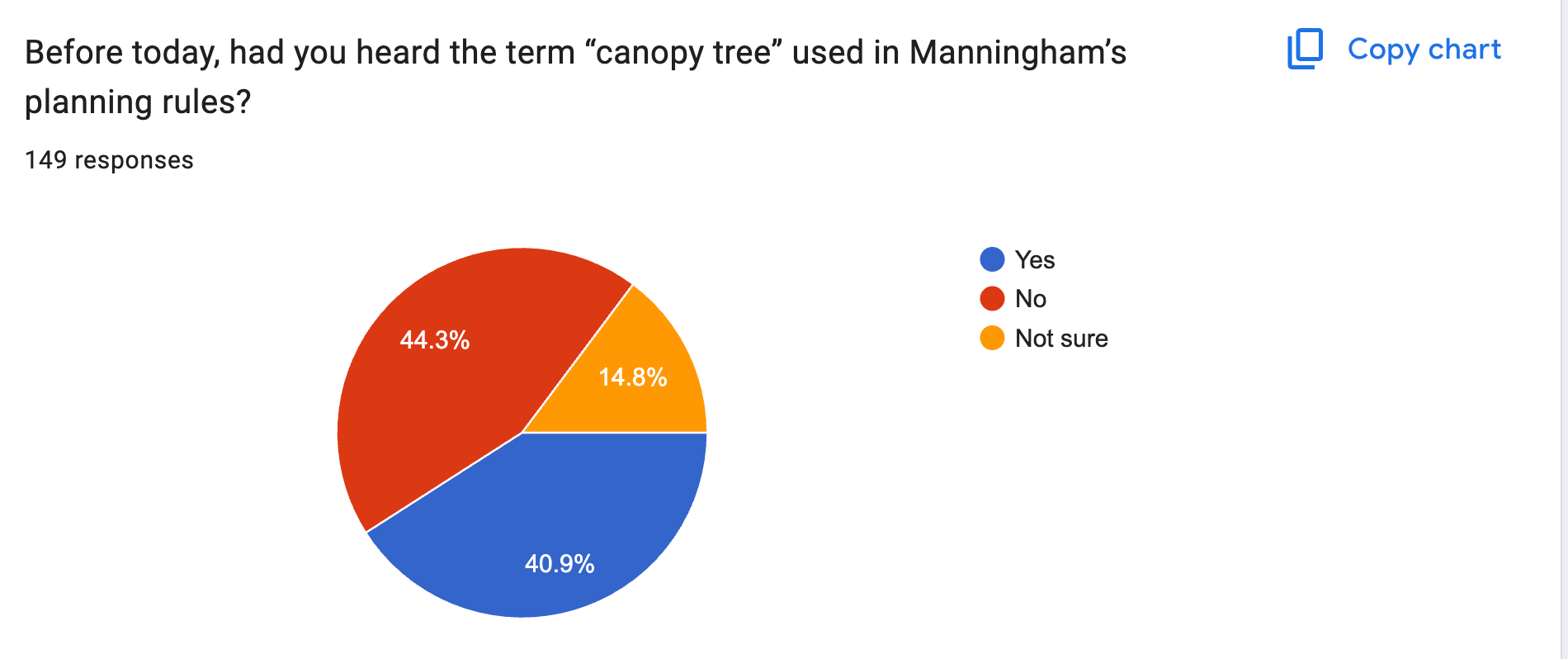
What the responses show:
Awareness is mixed, with many either unfamiliar or unsure.
What this indicates:
What this suggests is a gap in how things are being explained.
People care about trees, but the language used to describe them — like “canopy tree” — isn’t always familiar. It suggests the way this information is communicated isn’t quite connecting with everyday residents.
3. Understanding of what a canopy tree is
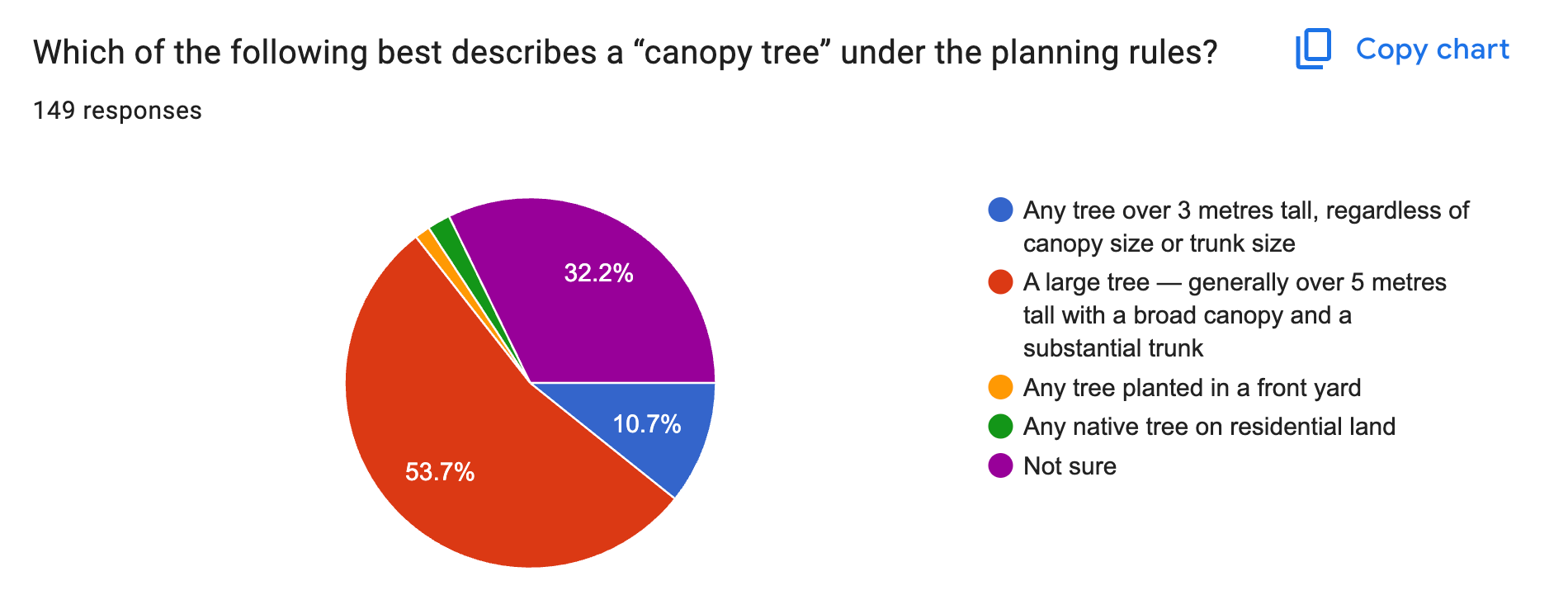
What the responses show:
Some correct understanding, but a large portion unsure or incorrect.
What this indicates:
Even when people have heard the term, many aren’t quite sure what it means. It suggests that simply raising awareness isn’t enough — what’s needed is clearer, more accessible explanations.
4. Awareness of permit requirements
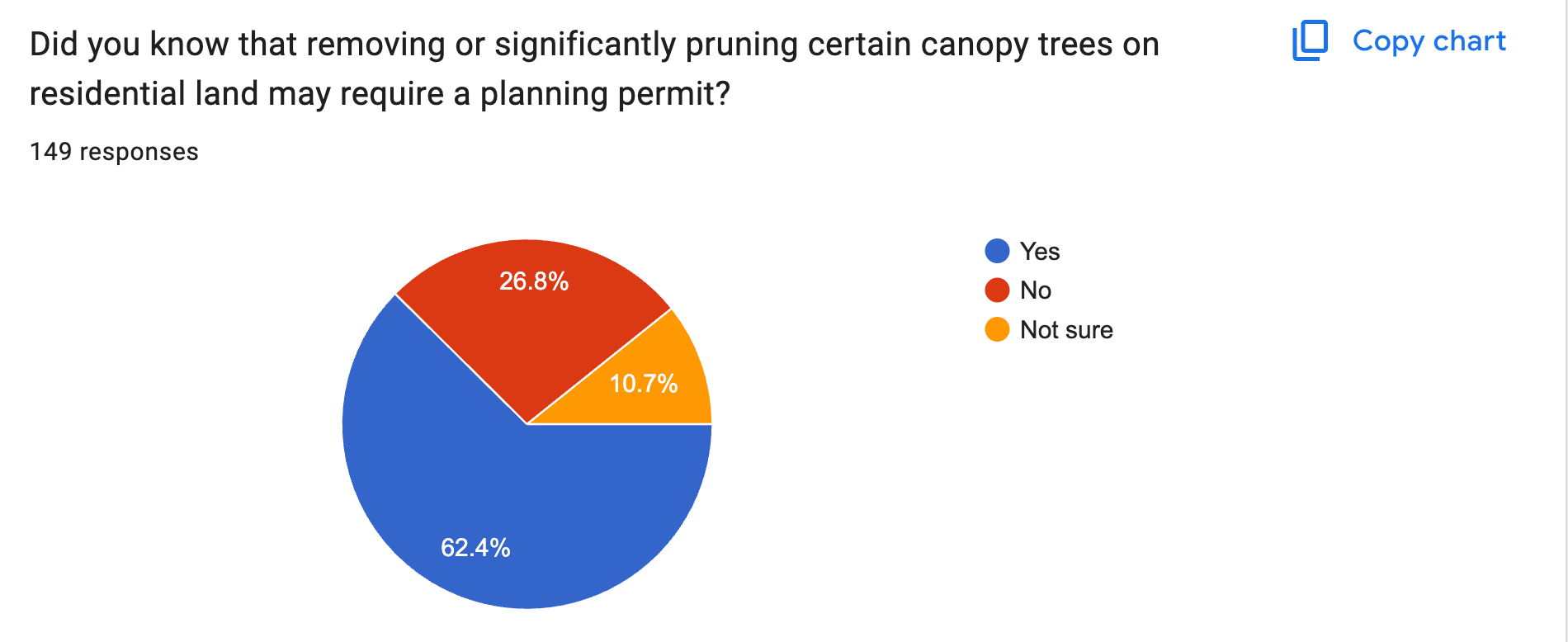
What the responses show:
A reasonable number know permits may be required, but many are unsure.
What this indicates:
Many people know there are rules, but aren’t sure what’s required.
5. When a permit is required
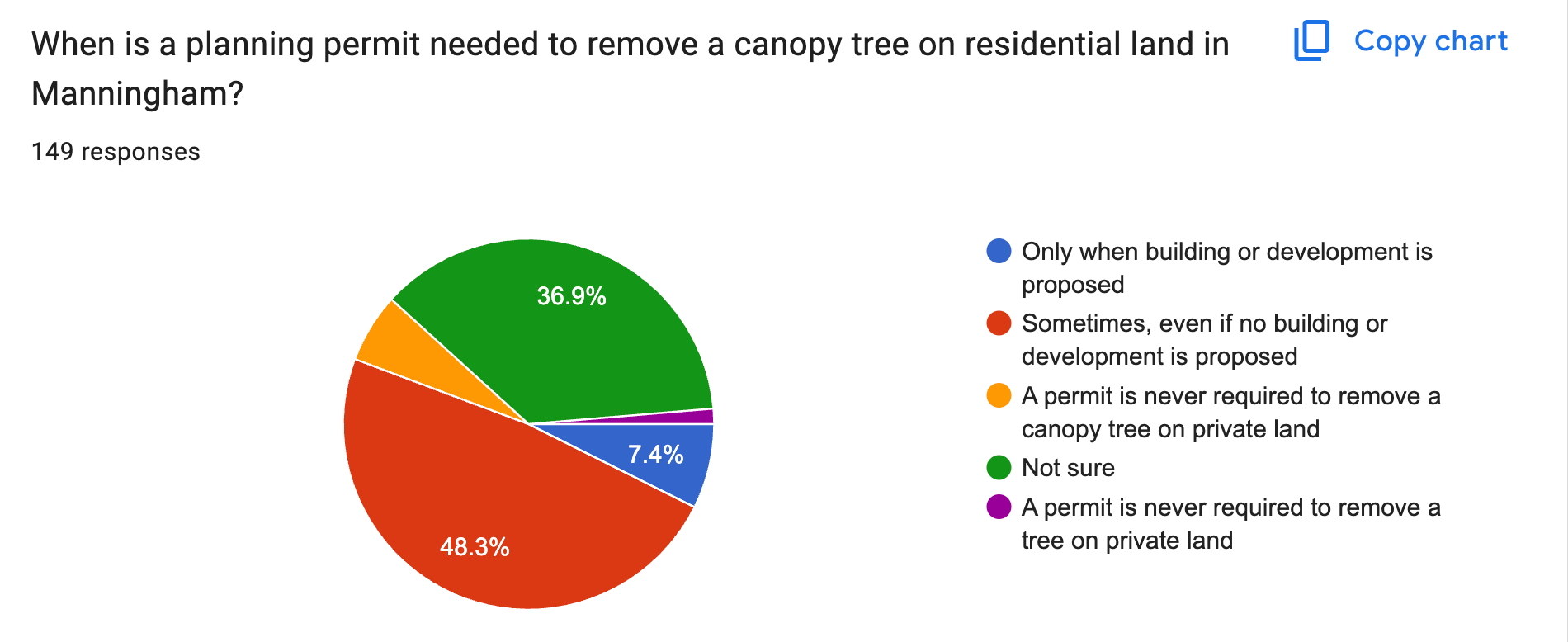
What the responses show:
A large portion unsure, with fewer confidently correct.
What this indicates:
This is an important gap in understanding how things work in practice. Knowing that rules exist isn’t the same as knowing what to do. That’s where confusion can lead to problems.
6. Replacement tree requirements
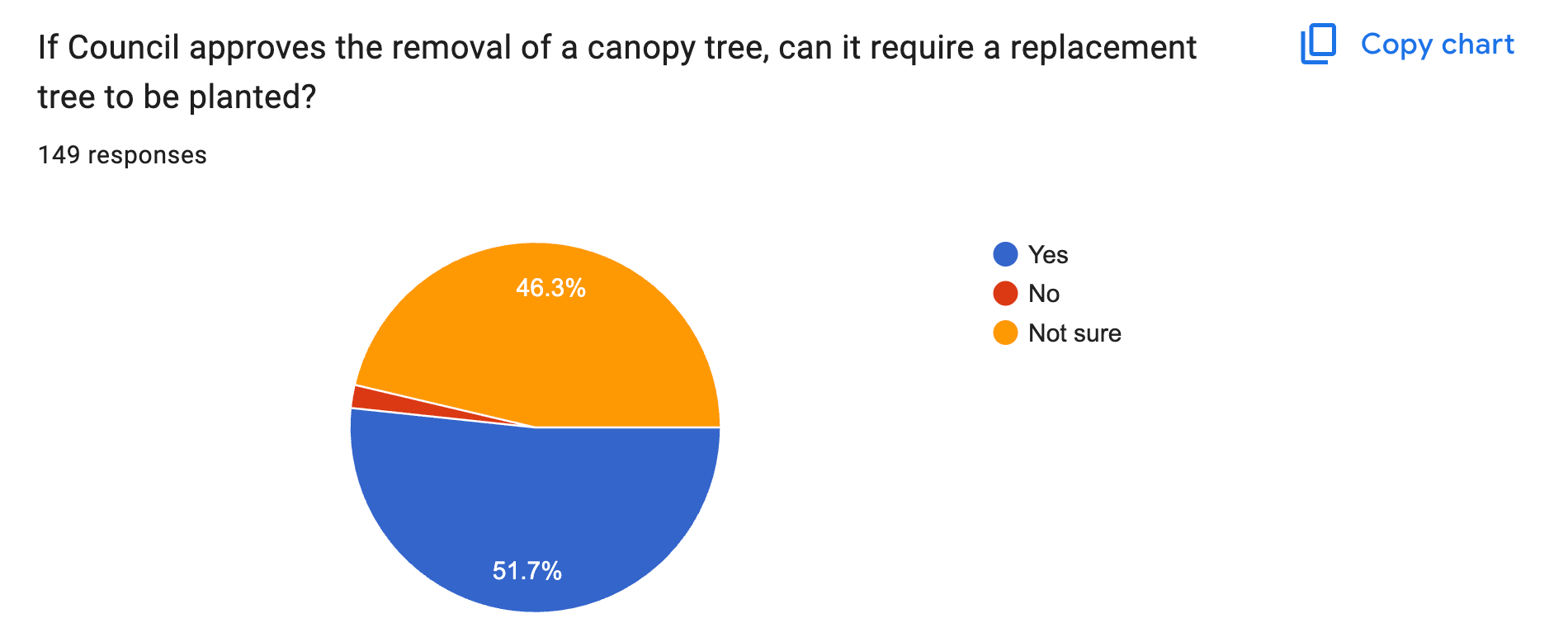
What the responses show:
High uncertainty, with some awareness.
What this indicates:
Many residents don’t fully understand what’s involved or what they need to do from start to finish. As a result, the rules don’t work as well as they could — because people can’t follow them properly if they only understand part of the process.
7. Environmental benefits of mature trees
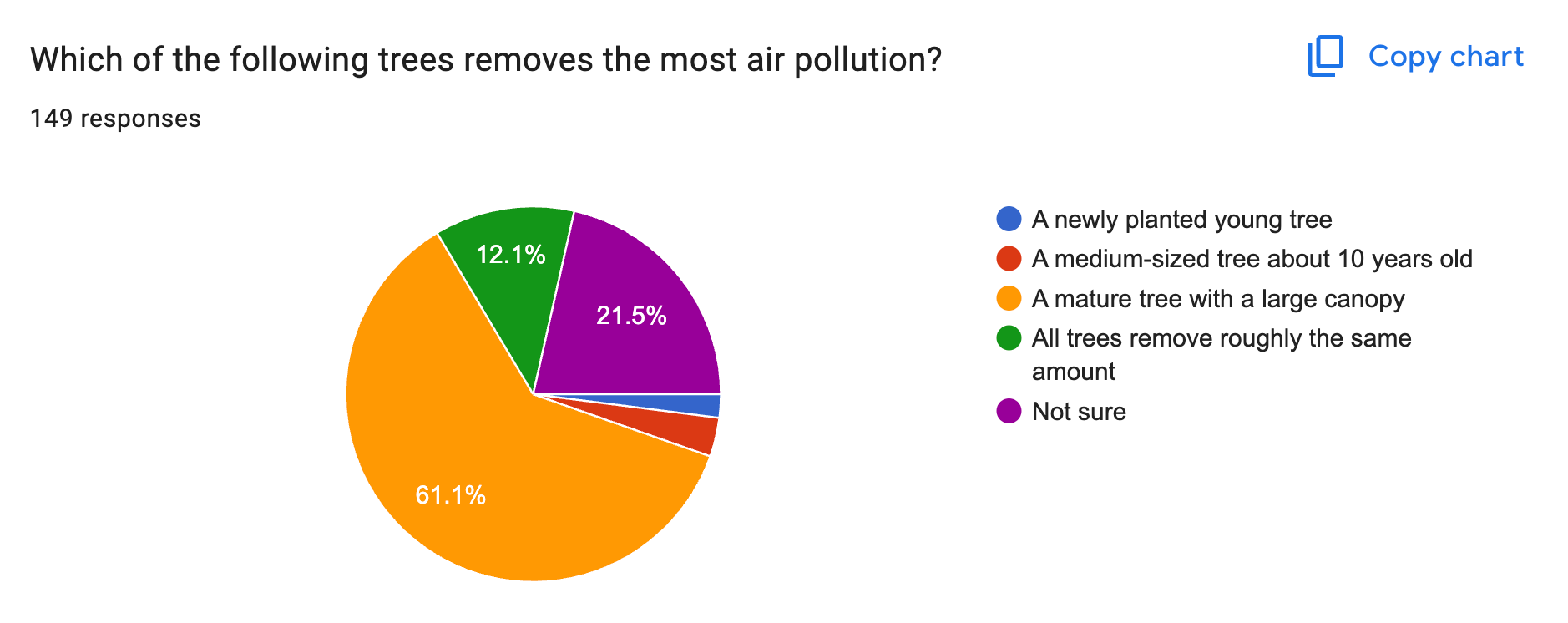
What the responses show:
Most people understand that larger, established trees offer greater environmental benefits.
This shows the community already understands why tree canopy matters. That’s a strong starting point — it means the focus doesn’t need to be on convincing people, but on clearly linking the rules to what they already value and understand.
8. Perception of canopy change
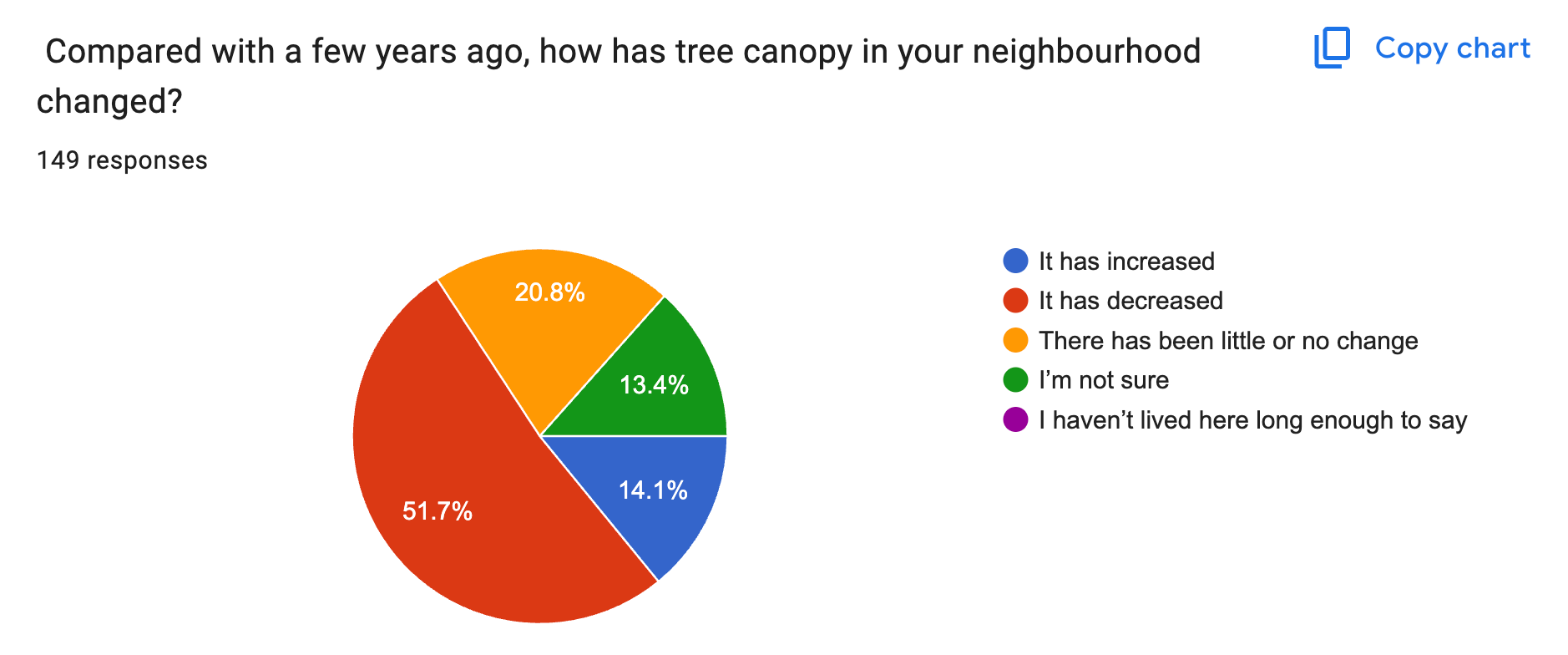
What the responses show:
Around half believe canopy has decreased.
What this indicates:
Many residents feel that tree canopy has been lost in recent years. Whether or not it’s been formally measured, this feeling matters. It shapes how people respond to change, makes them more sensitive to new development, and influences how much trust they have in planning decisions.
9. Council communication
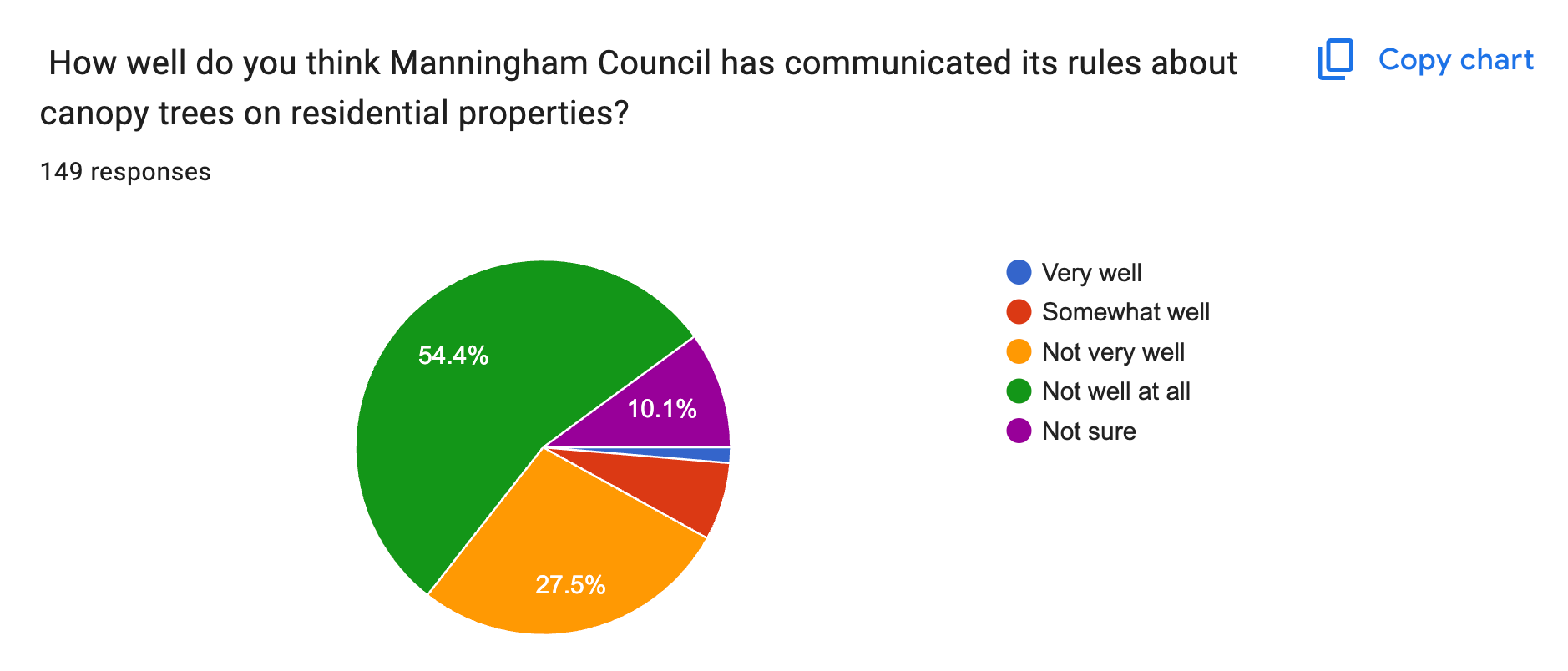
What the responses show:
Strong majority say communication is not clear.
What this indicates:
This sits at the heart of the issue. The gaps in understanding we see across the survey point to a gap in how information is being communicated. Many residents simply aren’t being reached, or the information isn’t coming through in a way that’s clear and easy to understand.
10. Views on regulating trees on private land
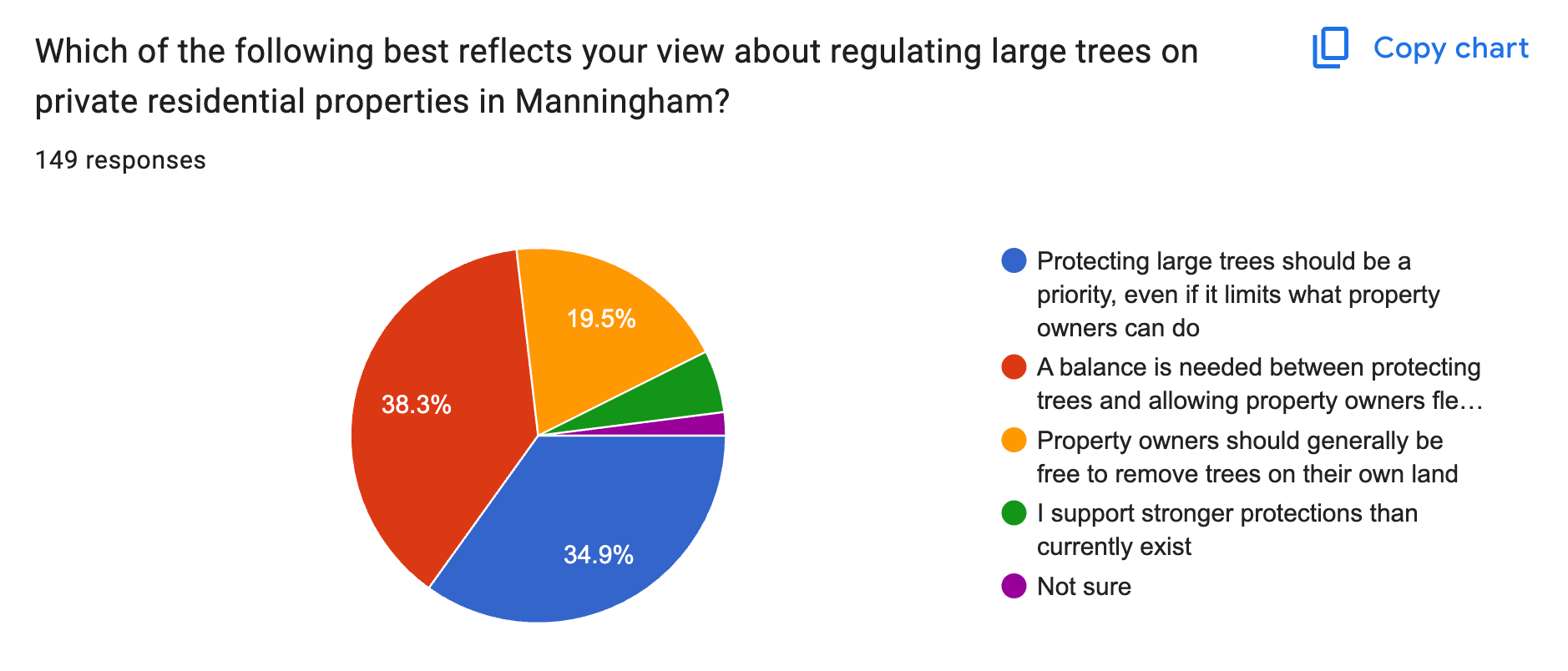
What the responses show:
Most support a balance; others lean toward protection or property rights.
What this indicates:
The views within the community are mixed and considered. It’s not simply a case of being for or against tree protection. Many residents are trying to balance caring for the environment with their rights as property owners and the practical realities they face.
The survey shows a community that cares deeply about tree canopy, but isn’t always clear on how the rules work in practice. The number of “not sure” responses suggests this isn’t about a lack of interest, but that information isn’t coming through clearly. At the same time, many residents feel that tree canopy has declined in recent years, giving the issue a real sense of urgency. Importantly, many residents are looking for a balance — recognising the importance of protecting the environment while also managing the realities of their own properties. This provides a helpful starting point for how the rules are communicated and applied in practice.