Table of Contents
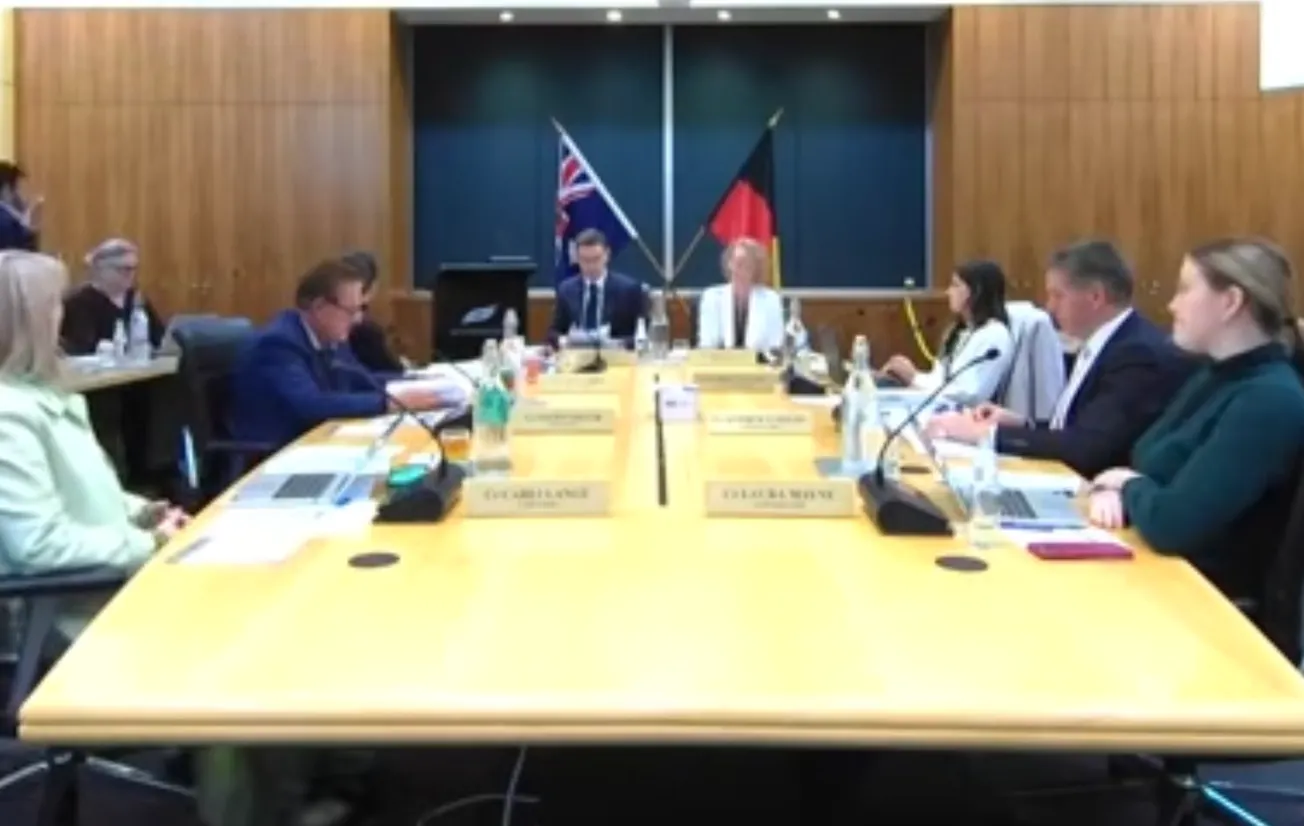
The September Council meeting focused on recent Victorian Government planning reforms, the mandated fourth glass bin, the First Nations Framework 2026–30 and Manningham’s financial performance. Councillors also considered public questions about tree root management and street sweeping, a petition concerning Ruffey Lake Park, a draft Community Engagement Policy and a Notice of Motion on food security.
Cr Peter Bain was an apology for the meeting, while Cr Andrew Conlon attended online.
Planning reforms
One of the major discussions concerned recent Victorian Government planning reforms. As of 16 September 2026, nine Victorian planning scheme amendments had been released by the Minister for Planning since the beginning of the month. Council officers said the volume and pace of the amendments represented a significant program of planning reform and noted that Council and the community had not been consulted on their development.
One change was the expansion of the VicSmart assessment pathway to include applications for the construction of up to four dwellings on a lot in all residential zones. Council officers said this would have significant resourcing implications for the statutory planning team and reduce planning fee revenue by approximately $100,000 a year.
The community would not be notified of applications to develop up to four dwellings on a lot and would not have review rights at VCAT. Officers also noted that the shortened assessment timeframe could affect the ability of areas such as traffic, drainage and environment to provide timely and comprehensive input.
Council also raised concerns about the introduction of minimum standards for public open space in established urban areas, particularly a minimum standard of 8,000 square metres. Officers said this may be difficult to achieve in higher-density areas, particularly where no new mechanism had been provided for Council to fund expansion of the Open Space Network.
Amendments to the definition of garden area were also identified as a concern. Uncovered hard surfaces, such as driveways, could be included in the definition. Council officers said reducing the amount of permeable and vegetated land required on a site may undermine Council’s urban greening and cooling objectives and tree canopy targets.
Council unanimously noted the reforms and authorised Mayor Jim Grivas to write to the Premier and Minister for Planning expressing disappointment that no consultation had been undertaken with Council and the community. Council also noted that a minimum 30-day notice period would be inadequate for councils to effectively review, implement and embed the required changes within their systems and processes.
Fourth glass bin
The mandated fourth glass bin was another major issue. The Victorian Government has mandated the introduction of a separate glass recycling service by 1 July 2027. However, Council said the Service Standards and supporting regulations had not yet been released, meaning requirements relating to service design, operational delivery, compliance and implementation remained uncertain.
Council’s community engagement showed strong opposition to the introduction of a fourth glass bin. More than 25,000 responses were received across participating councils, including 1,706 responses from Manningham residents. Overall, 83 per cent opposed the introduction of a fourth glass bin, while 91 per cent supported expansion of the Container Deposit Scheme (CDS).
Preliminary financial modelling estimated that Council would incur a gross capital cost of approximately $2.66 million to purchase glass recycling bins, plus an additional annual operating cost of approximately $193,000.
Council officers had recommended deferring a decision on the fourth bin until the Victorian Government released the new Service Standards and associated regulations. However, Council went further, resolving not to implement a separate kerbside glass recycling service.
Council noted that the Victorian Government may still release final Service Standards and a regulatory framework mandating the service and that Council’s decision may result in non-compliance with those Standards.
It also acknowledged that the extent of its future obligations and any potential liability for non-compliance could not yet be fully assessed because the regulations and Service Standards had not been released.
Council supported continued advocacy and engagement with the State Government and local government partners and agreed to maintain flexibility within future waste contracts to enable a glass kerbside service if required.
The motion was supported by seven councillors, with Councillor Anna Chen voting against it.
First Nations Framework
Council unanimously endorsed the First Nations Framework 2026–30 and the First Nations Yarning Circle Terms of Reference.
The Framework represents the next stage in Council’s reconciliation work and provides a strategic approach to working with Wurundjeri Woi-wurrung as Traditional Custodians and with First Nations people in Manningham. It is structured around four key themes: Connection, Care for Country, Impact and How we do business.
The Framework will be supported by a First Nations Action Plan, expected to be completed in November 2026, with implementation commencing in January 2027.
Financial performance
Council also unanimously endorsed in principle the 2025/26 Financial Report and 2025/26 Performance Statement.
Manningham Council recorded a $14.59 million operating surplus, which was $0.61 million greater than the adopted budget. The adjusted underlying surplus was $4.39 million, which was $4.34 million greater than budgeted. Council remained debt-free, delivered $47.3 million in capital works and recorded $3.32 billion in net assets.
The Financial Report and Performance Statement remained provisional pending finalisation of the Auditor-General process.
Community Engagement Policy
Council unanimously endorsed the draft Community Engagement Policy for community consultation in October.
The draft is a substantial rewrite of the 2021 policy and aims to provide greater clarity about how community feedback informs Council decisions, with a stronger focus on diversity, inclusion, equity, representation and transparency.
Feedback gathered during the review showed that participants wanted Council to engage earlier, explain what happened after people provided feedback, be clearer about how decisions were made and provide a greater range of ways for people to participate.
Participants also called for engagement to be more accessible and representative, including greater efforts to hear from young people, people with disability, culturally diverse communities, older residents and other less-heard groups.
Public Question Time
During Public Question Time, a resident asked why preventative measures were not put in place as part of Council’s Tree Management Policy to help prevent future damage to private drainage assets and other assets.
Director City Services Lachlan Johnson said the matter had been investigated on several occasions by Council officers, including Council arborists and Council’s infrastructure team, and had also been reviewed by Council’s independent claims manager.
Council arborists assessed the tree and found it was in good health, structurally sound and did not meet the criteria for removal under Council’s Tree Management Policy. Mr Johnson said tree roots are generally attracted to moisture and, where roots are found within a drainage system, this is typically associated with defects such as deteriorated or cracked pipes, failed joints or poor connections.
Mr Johnson said root barriers can be effective in some circumstances but are generally more suitable for new plantings. Installing them around established trees can require significant root pruning and potentially affect tree health and stability, so Council assesses their use on a case-by-case basis.
A second resident, Vincent Testa, questioned Mayor Jim Grivas about an ongoing matter concerning conflicting information Mr Testa said he had received from two Council officers about street sweeping.
Mr Testa referred to an earlier response from the Mayor stating that officers had previously provided details about his issue and that the Mayor considered the matter resolved. Mr Testa disputed that he had received the information in question in written form from a Council officer and said documents obtained through Freedom of Information had not identified written documentation of the information to which the Mayor had referred.
Mr Testa asked the Mayor to identify the specific information he was referring to, when and how it had been provided to him, and what information the Mayor had relied upon in concluding that his concerns had been resolved. He also requested that the answers be provided in writing.
Mayor Grivas responded that Mr Testa’s answers had been provided by Council officers and that he considered the matter resolved.
When Mr Testa attempted to continue speaking, the Mayor told him, “we’re not here for a debate”. Mr Testa then said he would leave information on the table “for governance”, before the Mayor again said the meeting was not there for a debate.
Ruffey Lake Park petition
A petition with 26 signatories requesting Council review the existing unfenced off-leash area at Ruffey Lake Park was tabled. Council unanimously referred the petition to the relevant officer for response.
Food security
Councillor Andrew Conlon moved a Notice of Motion requesting that officers prepare a report for the October 2026 Council meeting on current and projected food security needs within Manningham.
The report will consider existing services, identified gaps and potential community impacts arising from any reduction or discontinuation of existing food security services.
It will also examine options for Council to support and strengthen food security outcomes in Manningham from November 2026 to September 2030, including advocacy, partnerships, grants, funding and other forms of support for organisations and community groups delivering food relief, food security and healthy eating programs.
The report will also consider the legal, governance, financial, policy and procurement implications of the available options, including the potential role of existing providers and other suitably qualified organisations.
The motion was carried unanimously.