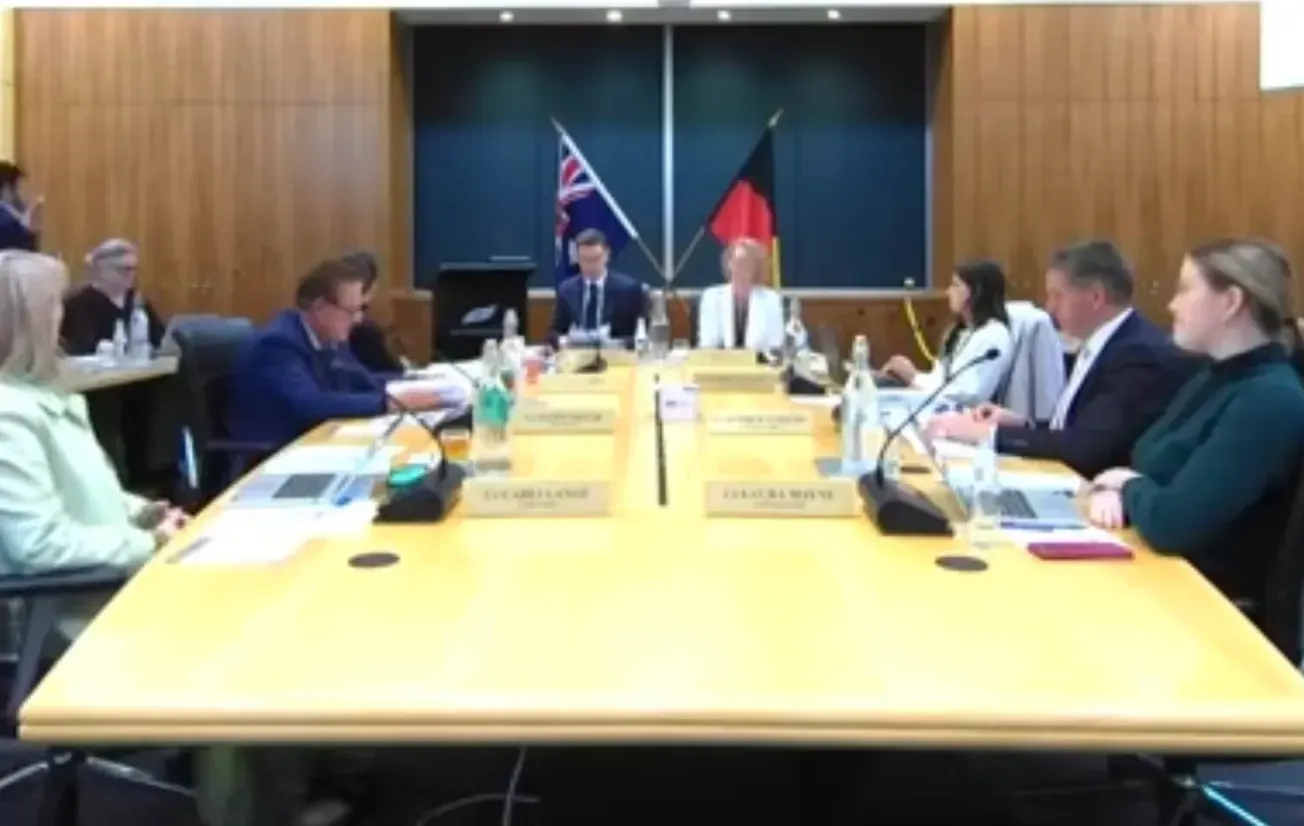
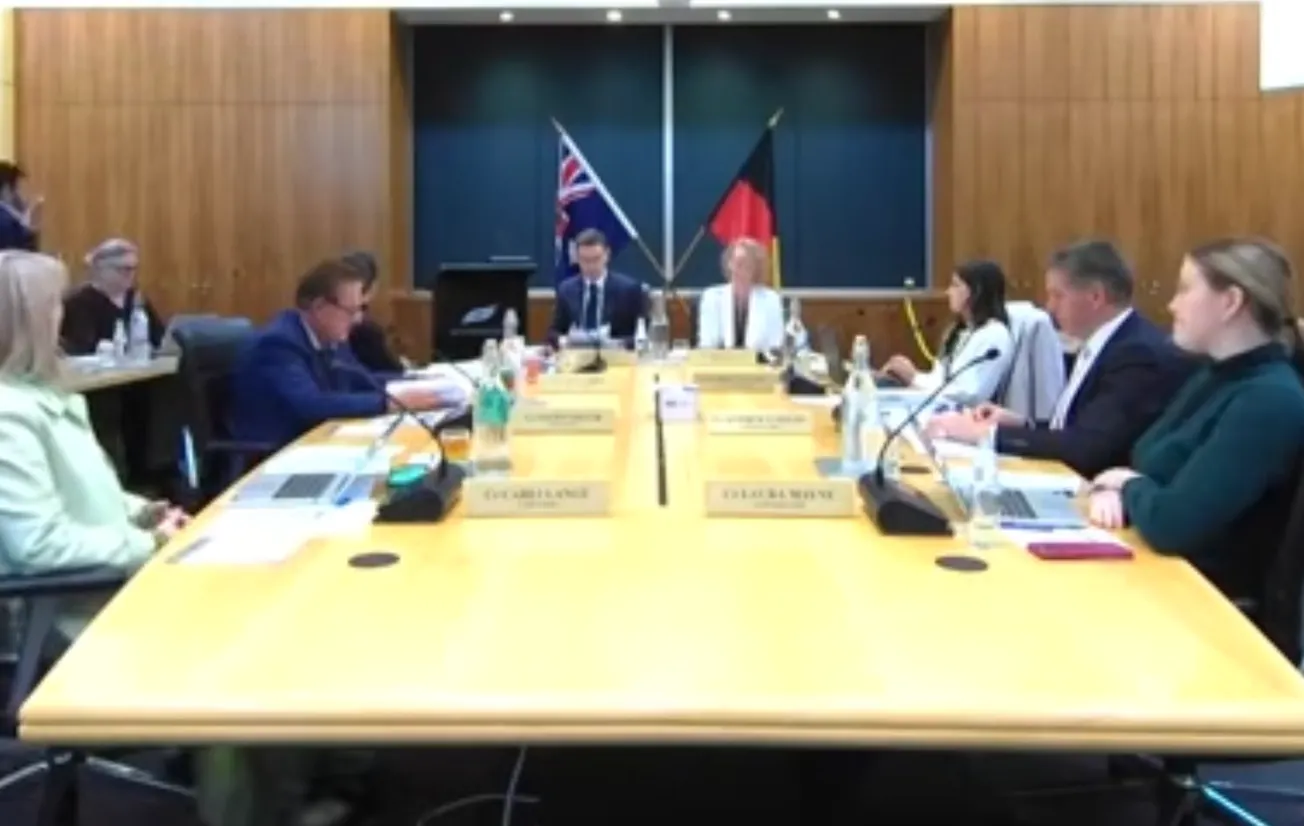
Manningham Council’s August meeting covered the end-of-year Capital Works Status Report, increased planning activity, questions about proposed Planning Scheme Amendment C141mann and renewed advocacy for better bus services.
Councillors also considered a new Advocacy Framework, five motions for the Municipal Association of Victoria’s October State Council meeting, a new bushland management contract, a petition calling for an end to fireworks at Carols by Candlelight, and recognised the achievements of local athletes at the 2026 Commonwealth Games.
Manningham Council closed the 2025–26 financial year with $47.26 million in capital infrastructure spending, almost matching its adopted budget of $47.32 million. Council reported that 180 infrastructure projects were designed, constructed or received expenditure during the year, with 138 projects completed or reaching their planned construction milestones. This represented a 90 per cent completion rate against the 154 projects listed in the adopted budget.
A further $8.4 million was carried forward into the 2026–27 financial year, with a significant proportion coming from grant funding. Council said 51 per cent of infrastructure expenditure during 2025–26 was for renewal work, while another 36 per cent went towards upgrades. No budget savings were identified because all available funding had been committed to priority projects and services.
Planning activity also increased during the financial year. Council received 910 planning applications in 2025–26, up from 736 the previous year. In the final quarter alone, 286 applications were received, the highest quarterly total of the year.
Council reported that 89.42 per cent of planning applications in the final quarter were determined within 60 statutory days, compared with a metropolitan average of 70.60 per cent. Overall, 93.16 per cent of all planning application decisions were processed within statutory timeframes, well above the metropolitan average of 72.75 per cent.
Questions about proposed Planning Scheme Amendment C141mann, which was a major issue at Council’s July meeting, returned during Public Question Time.
Doncaster East resident M Kustura asked why 45 Beverley Street and 49/49A Beverley Street had not been considered for acquisition. Director City Planning and Liveability Andrew McMaster said the properties currently identified under the proposed amendment — 47 Beverley Street and 48 and 48A Franklin Road — directly interface with Council-owned land at 50 Franklin Road. He said this would allow Council to create a contiguous area of open space and expand the reserve progressively.
Mr McMaster said the alternative properties raised by the resident did not directly connect with 50 Franklin Road, apart from corner boundary connections, and therefore would not deliver the same strategic outcome.
M Kustura also questioned why their Capital Improved Value had fallen by six per cent when Council’s published average residential movement was an increase of 1.8 per cent.
Mr McMaster said property valuations are determined independently each year by the Victorian Valuer-General, and Council is required to use the Capital Improved Value provided by the Valuer-General when issuing rate notices. He said ratepayers can appeal a valuation through the process provided with their rates notice.
Public transport was another major issue at the meeting.
Council endorsed five advocacy motions to be submitted to the Municipal Association of Victoria’s October 2026 State Council meeting. One called on the Victorian Government to publish a time-bound implementation plan for Victoria’s Bus Plan and Bus Network Reforms, including clear milestones and annual public reporting on progress.
Council also called for regular public updates on route upgrades and service frequencies, and for stronger cooperation with councils to improve safety around bus stops through measures including better lighting and passive surveillance.
In supporting the motion, Council cited findings from the Victorian Auditor-General’s Office showing that only 69 per cent of metropolitan buses arrived on time over the previous two years, while only 26 per cent of households had access to a high-quality bus service within 800 metres.
Council’s report also referred to its own recent community survey, which found that having no bus service near work or home was the biggest barrier preventing people from using buses.
Cr Anna Chen also raised bus services through a separate Notice of Motion.
The motion noted that Manningham is the only municipality in metropolitan Melbourne without train or tram services and that residents rely entirely on buses for public transport.
Council unanimously resolved to share relevant research and reports from the Victorian Auditor-General’s Office, Infrastructure Victoria, Movement and Place, the Eastern Transport Coalition and Manningham Council’s own Better Bus Services Survey with the State Government, Members of Parliament and local candidates.
The other MAV motions endorsed by Council included a call for sufficient dedicated ongoing State Government funding for specialised legal partners to work with councils to provide legal education, crisis support and referral pathways within local communities.
Council also called for the proposed Local Government Fair Jobs Code and associated regulatory framework to be deferred until its full details, obligations and impacts have been developed, publicly released and properly consulted on with the local government sector.
Another motion called for local government to be exempted from Victoria’s windfall gains tax. Council argued that the tax can create substantial liabilities when council-owned land is rezoned and may reduce funds available for roads, open space, recreation facilities, libraries, community centres, affordable housing and other public infrastructure.
Council also called on the State Government to invest in shared digital platforms and technology services that could be used by all Victorian councils, together with common standards for cyber security, data governance, interoperability and technology architecture.
A new Advocacy Framework was also unanimously endorsed.
The framework establishes five objectives for Council’s advocacy: shaping public policy, securing funding and resources, elevating Manningham’s profile, representing community priorities, and strengthening partnerships and strategic relationships.
It also includes eight principles requiring Council advocacy to be evidence-based, community-centred, strategic, collaborative, apolitical, transparent, responsive and inclusive. The framework includes an assessment process to help determine advocacy priorities, as well as governance and reporting arrangements. Council also intends to publish advocacy outcomes on its website and in its annual report.
Council also awarded a new Bushland Management and Consultancy contract.
The estimated annual spend is about $1.30 million including GST, with a potential five-year value of about $6.55 million if both one-year extension options are exercised.
The new model will use panels of suppliers for bushland management, ecological consultancy and water-sensitive urban design services. Council said the approach will allow officers to more directly prioritise work across Manningham’s 72 bushland reserves, including weed and pest control, vegetation management, fire-risk reduction and ecological restoration.
Significantly, the Council report states that Council is currently non-compliant with State and Federal environmental legislation in several locations. The report refers specifically to requirements under the Catchment and Land Protection Act 1994 relating to pest plants and animals and the protection of land and water resources. Council said the new contract arrangements are intended to improve compliance.
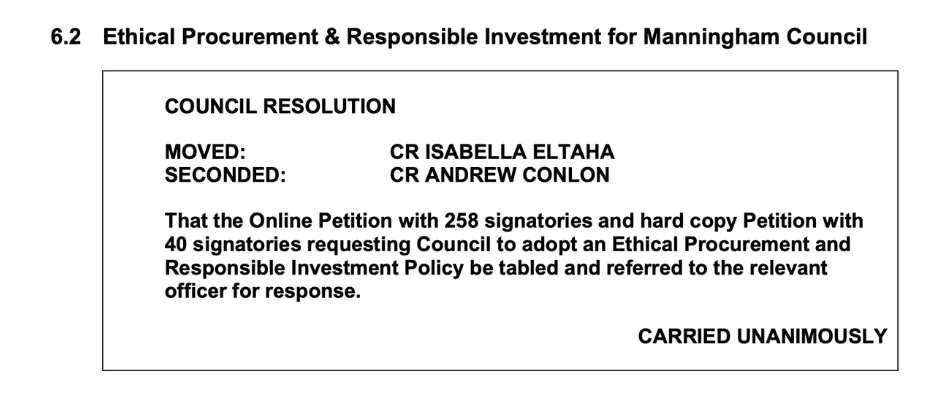
A petition with 12 signatures was also tabled calling on Council to cease fireworks at Carols by Candlelight in Ruffey Lake Park. Council unanimously resolved to refer the petition to the relevant officer for a response.
The meeting also began with recognition of three Doncaster Athletics Club athletes who competed at the 2026 Commonwealth Games.
Abbey Caldwell won gold in the Mile, while Tom Reynolds reached the 400-metre final and finished fifth with a personal best of 44.69 seconds, placing him fourth on Australia’s all-time list at the age of 21. Steph Ratcliffe reached the hammer throw final and finished seventh. The Deputy Mayor congratulated all three athletes on their achievements and their contribution to the club and wider community.
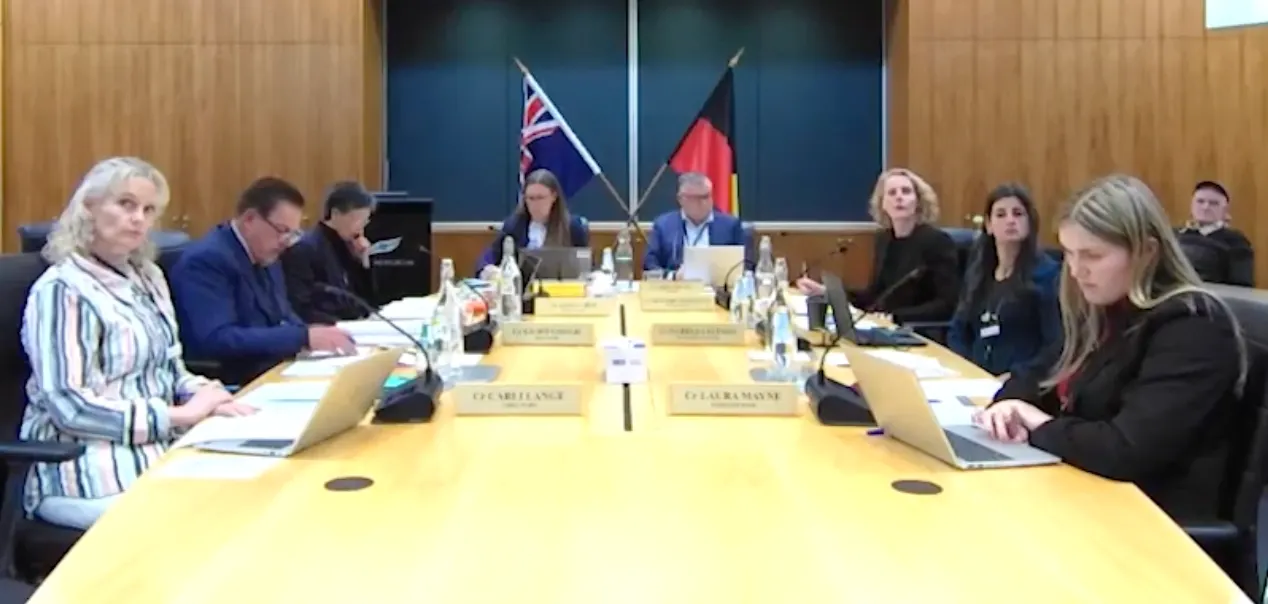
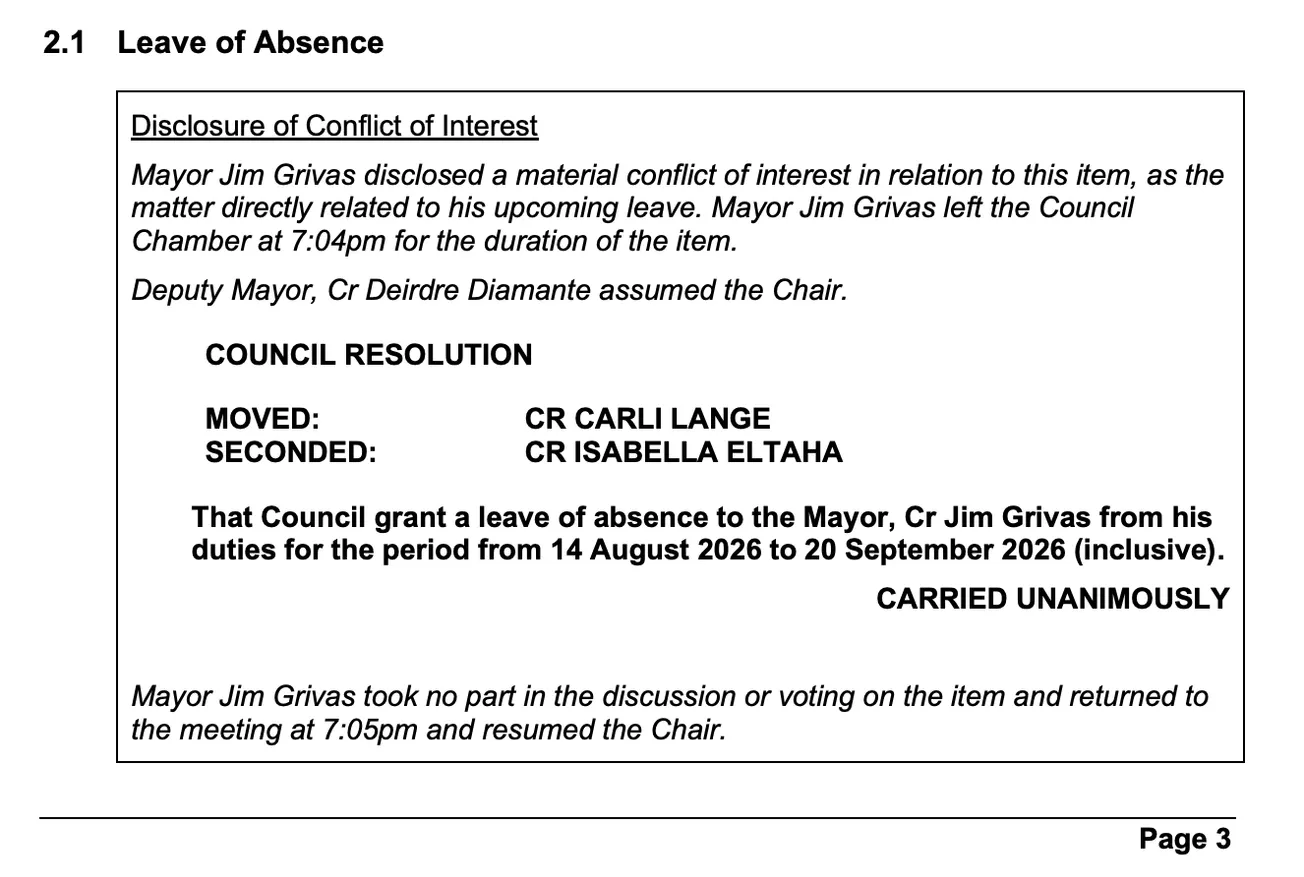
Mayor Cr Jim Grivas was on an approved leave of absence for the meeting, with Deputy Mayor Cr Deirdre Diamante chairing in his absence. Cr Peter Bain was also an apology.